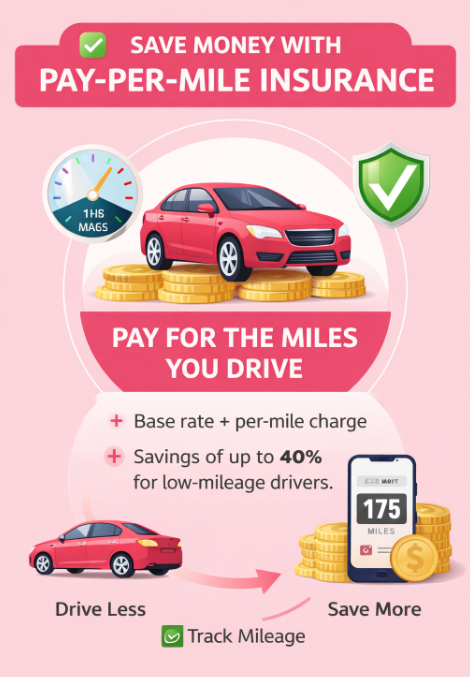
With rates becoming too expensive for many drivers, many people are turning to pay-as-you-drive car insurance plans. Usage-based insurance (UBI), also known as pay-per-mile coverage, adjusts your rates based on your actual vehicle use rather than estimates. This approach includes true mileage-based plans, where costs are directly tied to miles driven, and on-demand, flexible policies that let you activate coverage only when needed. These models help infrequent drivers avoid overpaying for unused protection.
The term “pay-as-you-go car insurance” covers mileage-tracked programs and short-term flexible options. While they differ in mechanics – one focuses on distance, the other on duration – both aim to align premiums with real-world needs. This comprehensive overview examines leading U.S. providers, details their operations, ideal customer profiles, advantages and drawbacks, and provides a general cost ranking for occasional drivers, with key considerations.
When Usage-Based or Flexible Coverage Delivers Real Savings
These options often reduce costs significantly if your profile matches:
- Annual mileage below 8,000–12,000 miles
- Remote work, frequent public transit use, or a rarely driven spare vehicle
- Primarily short, daytime trips (for behavior-monitoring variants)
- Ability to skip non-essential extras like roadside help if unnecessary

They may not prove economical if:
- You log average or high mileage (daily commutes, frequent travel)
- Privacy concerns outweigh potential discounts from tracking
- You prefer a hassle-free setup without apps or devices
- Risk factors already inflate base rates
Top Pay As You Drive Car Insurance Providers in 2026
Nationwide SmartMiles
Nationwide’s SmartMiles stands out as a top-rated pay-per-mile program, frequently praised for customer satisfaction in usage-based coverage categories. It charges a fixed daily or monthly base plus a variable per-mile fee, with a generous daily cap (often 250 miles) to protect against occasional longer trips.

Leading Pay-Per-Mile Choice
Ideal for: Occasional drivers seeking reliability from a major insurer, especially those valuing broad availability (44 states).
Pricing structure: Base premium covers parked risk, plus mileage charge. Tracking via plug-in device or connected vehicle tech.
Allstate Milewise
Allstate’s Milewise offers pay-per-mile coverage backed by a well-known carrier, appealing to those who prioritize familiar service networks.

Established Brand with Per-Mile Flexibility
Ideal for: Drivers wanting big-insurer perks alongside mileage-based pricing, available in about 20 states.
Pricing: Base rate plus per-mile charge, tracked via app or plug-in device, with daily mileage caps in most areas.
Mile Auto
Mile Auto specializes in pay-per-mile without continuous monitoring—drivers submit monthly odometer photos for verification.

Privacy-Focused Mileage Verification
Ideal for: Privacy-conscious low-mileage drivers (under 10,000 miles/year) in supported states (AZ, FL, GA, OH, OR, TN, TX).
Pricing: Base rate plus per-mile charge, calculated from periodic odometer photo submissions.
Hugo Insurance
Hugo provides flexible, app-based coverage with micropayments, allowing activation for days, weeks, or ongoing plans without high upfront costs.

On-Demand Short-Term Activation
Ideal for: Drivers seeking short-term flexibility without long-term commitments — available in 16+ states.
Pricing: Pay only for active coverage periods. Options include liability or full coverage, purchasable in small time increments.
Other Notable Options
- Lemonade (incorporating former Metromile tech): Limited pay-per-mile in select states (e.g., AZ, OR, WA); digital-first for tech-savvy users.
- Just Insure: Pay-per-mile with flexible payments, targeting California and similar markets.
Provider Comparison Table
| Provider | Type | Tracking Method | Availability (States) | Typical Savings Potential | Best For |
|---|---|---|---|---|---|
| Nationwide SmartMiles | Pay-Per-Mile | Device / Connected Car | 44 | Up to 40%+ with safe habits | Reliable national coverage |
| Allstate Milewise | Pay-Per-Mile | App / Device | ~20 | 30–40% for low miles | Brand familiarity |
| Mile Auto | Pay-Per-Mile | Odometer Photos | 7 | 30–50% for ultra-low | Privacy preference |
| Hugo | Flexible / On-Demand | App Activation | 16+ | Varies; budget flexibility | Intermittent drivers |
| Lemonade | Pay-Per-Mile (Limited) | App / Device | Select (e.g., 3–7) | Competitive digital | App-centric users |
General Cost Ranking for Low-Mileage Drivers (Under 8,000 Miles/Year)
Based on 2025 trends (individual results vary):
- Most Affordable Tier: Mile Auto, Nationwide SmartMiles – Sharpest for minimal driving.
- Competitive Mid-Tier: Allstate Milewise, Lemonade – Balanced with broader features.
- Flexibility-Focused: Hugo – Higher average for full-year but excels in short bursts.
Sample Cost Breakdown
| Annual Miles | Traditional Policy (Est. Monthly) | Pay-Per-Mile (Base $50 + $0.05/mile) | Potential Monthly Savings |
|---|---|---|---|
| 4,000 | $150 | $67 | $83 |
| 8,000 | $150 | $83 | $67 |
| 12,000 | $150 | $100 | $50 |
| 15,000+ | $150 | $125+ | Minimal or None |
Benefits and Challenges of UBI Plans
Programs like Progressive Snapshot, State Farm Drive Safe & Save, or Travelers IntelliDrive monitor habits (braking, speed, night driving) for discounts on standard policies—not direct per-mile charging. They suit safe but higher-mileage drivers open to telematics.
Broad Benefits
- Aligns costs with actual risk and usage
- Encourages mindful driving
- Suited to urban, remote, or multi-modal lifestyles
- Reduces premiums for parked vehicles
Broad Challenges
- Inconsistent state availability
- Requires some form of mileage or usage verification
- Savings erode with increased driving
- Not optimal for variable or high-volume patterns
Selecting Your Best Pay-As-You-Drive Car Insurance Fit
- Ultra-low mileage + max savings: Prioritize Mile Auto or Nationwide SmartMiles.
- Established brand preference: Allstate Milewise or Nationwide.
- Short-term/cash-flow needs: Hugo.
- Tracking aversion: Opt for photo-based, like Mile Auto.
Always obtain multiple quotes, factoring in realistic mileage (including peak months).
Common Questions Answered
- What defines usage-based coverage? Primarily mileage-linked or habit-monitored adjustments; flexible plans add time-based activation.
- Worth it at 10,000 miles/year? Borderline—calculate base + per-mile vs. standard quotes.
- Location tracking involved? Varies; some mileage-only, others include routes—review privacy terms.
- Full coverage available? Yes, with most, subject to state rules.
- No-driving months? Pay-per-mile: Base persists; flexible: Deactivate (mind gaps).
- Road trips impact rates? Yes, in mileage plans—plan for spikes.
- Different from standard UBI? Pay-per-mile charges are explicitly by distance; general UBI discounts for behavior.
- Lapses in flexible plans? Risk future rate hikes—maintain continuity if needed.
- Fair comparison tips? Standardize limits/deductibles; project annual costs with varied mileage.
- Quickest, cheapest find? Quote specialists (e.g., Nationwide/Mile Auto), one major, and a traditional low-cost option.
The Final Word On Pay As You Drive Car Insurance
In 2026, usage-based and flexible insurance will offer genuine relief for under-utilized vehicles, potentially cutting bills substantially for matching profiles. Specialists often lead in pure savings for minimal drivers, while major carriers provide security, and on-demand apps excel in adaptability.
The key to success: Model costs with honest mileage projections, including occasional highs. Shop quotes across types to reveal your optimal match – savings await those who drive smarter, not harder. Explore options today for tailored protection that fits your life. Compare pay-as-you-drive car insurance quotes online and save big with direct rates.