Temporary Car Insurance in California: What You Need to Know (2026 Guide)
So you need car insurance… but only for a little while. Maybe you’re borrowing a car, visiting from out of state, test-driving a vehicle, or you just want coverage for a short window. California can be confusing here, because “temporary car insurance” isn’t sold the way most people imagine it.
What You Need to Know
- Most big insurers don’t sell true “1-day” or “1-month” standalone policies.
- Best real-world options: start a standard policy and cancel early (check fees), non-owner liability insurance, rental coverage, or pay-as-you-go / usage-based plans.
- Always confirm: cancellation rules, fees, limits, and what you owe in the first 30 days.
- Avoid sketchy “temporary insurance” ads from unknown providers with unclear limits and exclusions.
What Is Temporary Car Insurance in California?
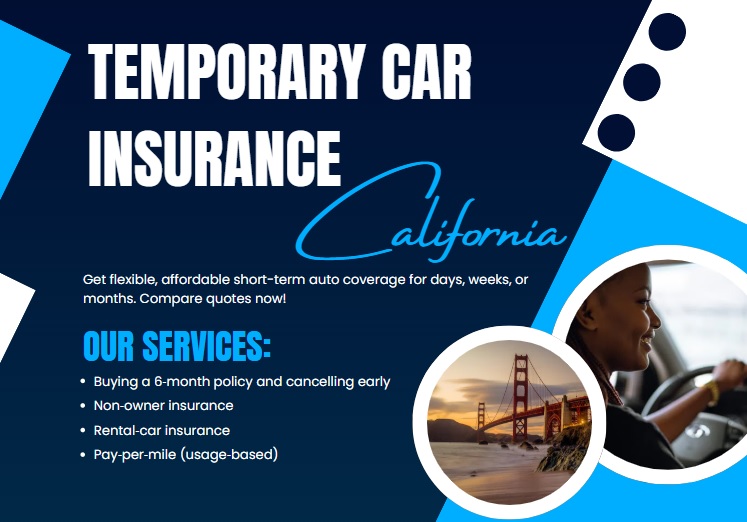
In California, “temporary car insurance” usually means you’re using a workaround—not buying a special 7-day policy off the shelf. Most mainstream auto policies are written in standard terms (often 6 or 12 months), so short-term coverage usually looks like one of these approaches:
- Start a standard policy and cancel early (you may receive a prorated refund, but fees can apply).
- Non-owner insurance (liability coverage for drivers who don’t own a car but need to drive borrowed/rented vehicles).
- Rental-car coverage (through the rental company and/or certain credit card benefits—always verify details).
- Usage-based / pay-per-mile if you drive very little.
California Minimum Insurance Requirements (Updated)
If you’re driving in California, you must meet the state’s minimum liability requirements. As of January 1, 2025, California’s minimum liability limits increased to 30/60/15:
- $30,000 bodily injury liability per person
- $60,000 bodily injury liability per accident
- $15,000 property damage liability per accident
These changes replaced the old 15/30/5 limits and are tied to Senate Bill 1107. :contentReference[oaicite:0]{index=0}
Why You Can’t Usually Buy True “Day-to-Day” Policies From Big Insurers
Short-term standalone policies are uncommon in the mainstream market because underwriting and pricing are designed around longer terms. Insurers also worry about “front-loaded risk” (claims happening immediately after policy start), and short terms create more admin overhead per customer.
That’s why many “temporary insurance” ads you see online are either (a) marketing for standard policies, or (b) products with narrow coverage, high fees, or confusing exclusions. If it feels unclear, slow down and verify limits, insurer name, and proof-of-insurance rules.
How Much Does Short-Term Coverage Cost in California?
California pricing varies heavily by ZIP code, vehicle, driving history, and chosen limits—so any single “average monthly price” can mislead. What matters for temporary coverage is your total cost for the first 30 days and the refund/fee rules if you cancel early.
Alternative Options Worth Considering
🔹 Non-Owner Insurance (Liability)
- Best if you don’t own a car but need to drive occasionally (borrowed or rented vehicles).
- Often cheaper than full coverage, because it usually focuses on liability only.
- Learn how claims work before you drive: How to file a car insurance claim.
🔹 Rental Car Insurance
- Rental companies typically offer packages like CDW/LDW, supplemental liability, and personal accident coverage.
- Before you pay twice, compare: your personal auto policy + your credit card coverage + the rental counter options.
🔹 Pay-Per-Mile / Usage-Based Insurance
- Good if you drive rarely (the “base + per-mile” model can be cheaper for low mileage).
- If you end up driving a lot, it can become more expensive than a standard policy—so estimate your miles.
- Related: Pay-as-you-go car insurance.
Step-by-Step: How to Get Temporary Coverage Without Overpaying
- Pick the right approach:
- Borrowing a car occasionally → non-owner liability might fit.
- Renting → review rental counter options + your existing coverage.
- Driving very little → consider usage-based plans.
- Compare apples-to-apples quotes: same drivers, same address, same vehicle, same limits, same start date.
- Confirm the “first 30 days” total: down payment + installment fees + any service charges.
- Read cancellation rules before you buy: ask about short-rate penalties, minimum earned premium, and any admin fees.
- Buy and save proof of insurance: keep your ID card accessible (digital is usually fine, but confirm what you need).
Pros & Cons of “Temporary” Car Insurance Workarounds
Pros
- Flexible: you can cover a short window without staying uninsured.
- Potential savings: non-owner and usage-based plans can be cheaper in the right scenario.
- Legal compliance: avoids the huge risk of driving uninsured.
Cons
- Higher effective “daily” cost: short windows rarely get the best pricing.
- Fees can erase refunds: cancellation fees and minimum earned premium rules matter.
- Scam risk: vague “daily policy” ads can leave you underinsured.
- Lapses can hurt you: gaps can raise future pricing and create legal risk.
Tips & Tricks Table
| Tip | Why it matters |
|---|---|
| Ask about cancellation rules upfront | Fees or minimum earned premium rules can reduce (or eliminate) a refund. |
| Know what “full coverage” includes | It usually means liability + collision + comprehensive—but it still doesn’t cover everything. |
| Use non-owner insurance if you don’t own a car | Often a cleaner temporary liability solution than starting/canceling a full policy. |
| Usage-based can be great (if you truly drive less) | Pay attention to per-mile charges and how quickly costs rise if miles increase. |
| Apply online, then compare | Fast quoting helps you avoid overpaying: apply for auto insurance online. |
California-Specific Notes
- Minimum limits are now 30/60/15 (effective Jan 1, 2025). :contentReference[oaicite:1]{index=1}
- Low-cost auto insurance exists for eligible low-income drivers, but it’s designed for ongoing liability coverage—not “weekend-only” protection.
- Temporary coverage is usually a strategy (non-owner, rental options, usage-based, or starting/canceling a standard policy).
In Closing
Temporary car insurance in California isn’t typically a true 1-day product. But you can get covered honestly and legally by choosing the right method: start a standard policy and cancel early (fees matter), use non-owner liability, rely on rental coverage where appropriate, or use a usage-based plan if you drive very little.
If you want the fastest path, compare a few options side by side and focus on the total due in the first 30 days. Then save your proof of insurance and drive covered.
Note: This page is general information. Coverage needs and prices vary by driver, vehicle, and ZIP code. Verify policy details and current requirements with your insurer and official California resources.